Kids Cute Dinosaur Coloring Pages VOL 2: What to Check Before Using Them for Your Next Project
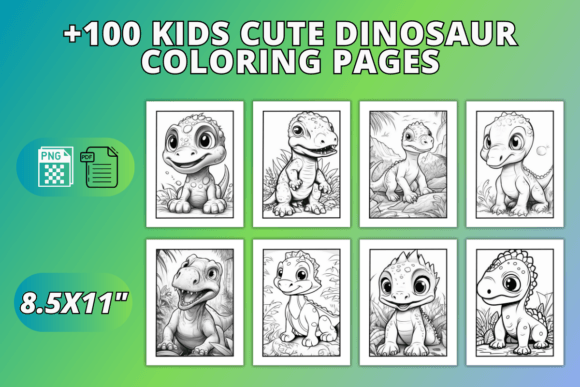
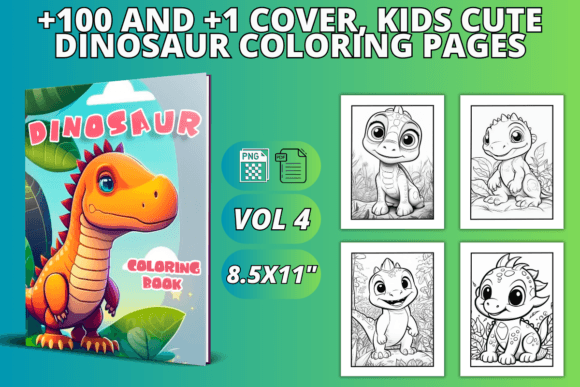
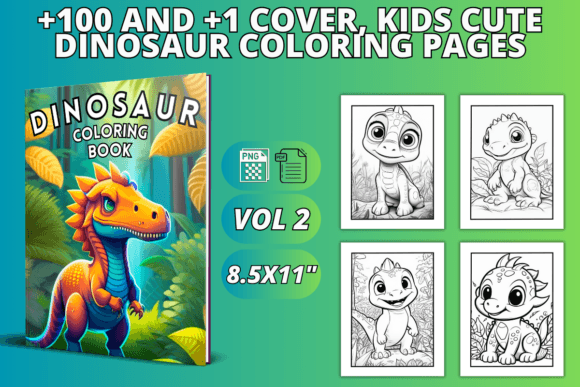
If you are putting together a low-content or no-content book for Amazon KDP or another print-on-demand platform, you have likely come across Kids Cute Dinosaur Coloring Pages VOL 2. This particular pack offers 100 psychedelic coloring pages featuring adorable dinosaurs, sized at 8.5″ x 11″ with no bleed, and comes as a ZIP file containing a ready-to-download PDF, 100 high-quality PNG pages, and a high-quality PNG cover. On the surface, it looks like a time-saving solution. And it can be—provided you understand what you are getting and where most people trip up.
Many creators, from beginners to experienced small business owners, grab such a pack and upload it directly, only to run into formatting issues, quality complaints, or poor sales. The problem is rarely the artwork itself. It is almost always the way the files are prepared or the assumptions made about how the platform will handle them. Let us walk through the most common mistakes, misunderstandings, and overlooked details so that you can avoid them and get a polished product out the door.
Mistake 1: Assuming No Bleed Means No Extra Work
The product description clearly states “no bleed.” That means the pages are designed to fit exactly within an 8.5″ x 11″ trim size without any extension beyond the edge. Many people take this as a signal that they can simply upload the PDF as-is to KDP and be done. That is not always true.
KDP requires specific margins and safe zones even for no-bleed books. If your content runs too close to the edge of the page, it may be cut off during trimming. Even with no bleed, you need at least 0.25 inches of margin on all sides. Some coloring pages in this pack might place dinosaur tails or feet near the edge, thinking that since there is no bleed requirement, the artwork can go right to the boundary. That is risky.
What to do instead: Open the PDF in a tool like Adobe Acrobat, Canva, or even a simple image editor and check the actual placement of the artwork. If any element falls within 0.25 inches of the edge, you will want to shift the entire page content inward slightly or add a white border around the artwork. This small adjustment prevents trimming disasters and keeps your dinosaurs fully intact.
Mistake 2: Overlooking the Psychedelic Style for Your Target Audience
The pack is described as “psychedelic” coloring pages. That means bright, swirling patterns, bold color contrasts, and trippy backgrounds mixed with cute dinosaurs. This style is fantastic for a certain kind of book—especially ones aimed at kids who love wild, imaginative designs or for adults who enjoy retro, whimsical art.
The mistake is assuming that all cute dinosaur coloring books should look the same. If you are targeting parents looking for simple, calming, or educational pages for very young children, psychedelic patterns might be too visually busy. Toddlers often need clear, bold lines with minimal background distraction. The psychedelic aesthetic works better for slightly older kids (ages 5–10) or for niche markets like retro-themed books or relaxation coloring for adults who enjoy intricate patterns.
How to avoid this: Before you buy, look at a few sample pages from the pack. Ask yourself: Does the complexity match the age group I want to reach? If you are set on using these pages for younger children, consider simplifying the backgrounds or using the dinosaurs as standalone elements. The PNG files make that possible—you can extract the dinosaur characters and place them on simpler backgrounds if you have basic image-editing skills.
Mistake 3: Ignoring the Difference Between PDF and PNG Usage
The ZIP file includes both a PDF and 100 individual PNG files. That is a generous offering, but many people treat them as interchangeable. They are not.
The PDF is ready for print—it is already compiled in the correct order, sized properly, and should be ready to upload to KDP or another printer. The PNG files are high-quality individual images that you can use for editing, rearranging, creating custom covers, or resizing. A common error is uploading the PNGs directly into a book file without first converting them to a single PDF with proper margins. Another mistake is using the PNGs for the interior but forgetting that they may lack the exact trim alignment that the PDF already has.
Better approach: Use the provided PDF as your starting point for the interior. Keep the PNGs as a backup for making edits—for example, if you want to change the order of pages, remove certain designs, or add your own branding. If you do need to rebuild the book from the PNGs, use a tool like Canva or Adobe InDesign to place each image on an 8.5″ x 11″ canvas and export as a single PDF with proper margins. Do not skip the margin check.
Mistake 4: Not Checking the Cover Requirements Separately
The pack includes a high-quality PNG cover, which is a nice bonus. However, a cover for a print-on-demand book is not just a pretty image. KDP and similar platforms require the cover file to include the back cover, spine, and front cover all in one image, sized precisely based on the number of interior pages and the paper type.
A standalone PNG cover image will almost certainly not meet those requirements. It might be just the front cover artwork. If you upload it alone, the platform will reject it or your book will arrive with a misaligned cover.
Solution: Use the provided cover PNG as the artwork for the front cover. Then, use KDP’s Cover Calculator or a template generator to create a full cover file that includes the spine and back cover. Place your cover PNG onto the front section of that template. This way you keep the cute dinosaur theme while complying with the platform’s technical specs. If you want a simpler route, use the cover PNG as the basis for a wrap-around design in Canva or Photoshop, making sure to account for spine width.
Mistake 5: Overlooking Print Quality Expectations for No-Bleed Books
The 100 pages in this pack are high-quality PNGs and a well-prepared PDF. But “high quality” in digital form does not always translate perfectly to print. Some users have reported that psychedelic coloring pages with very dark or densely patterned areas can look muddy or lose detail when printed on standard paper, especially if you use a budget printer or choose a low-cost print option.
This is not a flaw in the artwork. It is a mismatch between the design’s contrast and the printer’s capabilities. Light, pastel-heavy psychedelic patterns will print fine. Dark, high-contrast patterns may bleed through the page or lose their crispness.
Practical advice: Print a test copy before publishing. Use the same paper weight and printer type that your print-on-demand service will use. If you see issues, you can adjust the brightness or contrast of the PNGs in an image editor. Often, reducing the overall contrast by 10–15 percent helps the pages print cleaner while keeping the psychedelic feel.
Mistake 6: Forgetting That 100 Pages Is a Lot to Review
One hundred coloring pages sounds like a dream. You can publish a thick book with minimal effort. But that many pages also means a lot of content to check for duplicates, misaligned images, or anything that might have gone wrong during the ZIP extraction.
It is easy to assume that since the pack is professionally made, every page is perfect. That is usually true, but file corruption during download or extraction can cause a single page to become garbled. Also, some users report that a few pages in such large sets may have repeated elements or similar designs that look too alike when placed side by side.
How to handle it: Spend 20 minutes skimming through all 100 pages in the PDF before uploading. Remove any pages that are too similar or that feel redundant. You can easily delete pages from a PDF using free tools. A 90-page book with carefully chosen, varied designs often sells better than a 100-page book with noticeable repetition. Quality over quantity applies even in low-content publishing.
Mistake 7: Not Aligning the Product with Customer Expectations
The title of your book matters as much as the content. If you list your book as “Cute Dinosaur Coloring Pages for Kids” but the interior is clearly psychedelic, you may get returns or negative reviews from parents who expected simple, traditional coloring pages. The mismatch between the cover or title and the actual style is a fast way to lose trust.
Better approach: Be transparent in your listing. Use keywords like “psychedelic,” “trippy,” “wild patterns,” or “creative doodle style” in your subtitle and description. The artwork is wonderful—it just needs to reach the right audience. A title like “Kids Cute Dinosaur Coloring Pages VOL 2: Psychedelic Adventures for Creative Kids” sets the right expectation. You keep the cute factor while hinting at the wild style inside.
Mistake 8: Neglecting a Simple Look Inside Preview
Many first-time creators upload their book to KDP and immediately publish without enabling the “Look Inside” feature or without checking how the preview renders. For a book based on Cute Dinosaur Coloring Pages for Kids, the preview is critical. Buyers need to see that the dinosaurs are genuinely cute, that the psychedelic patterns are engaging, and that the page quality is high.
Fix: After uploading, always view the online preview. Scroll through several pages. Make sure no images are missing, that the margins look correct, and that the artwork displays cleanly. If the preview looks off, fix it before hitting publish. A few minutes of review now saves you from months of poor sales.
Bringing It All Together
Kids Cute Dinosaur Coloring Pages VOL 2 is a solid resource for anyone creating coloring books on a budget or tight timeline. The 100 psychedelic pages are charming, the file formats are flexible, and the no-bleed design removes one potential headache. But the difference between a book that sells well and one that collects dust often comes down to small details: checking margins, matching the style to your audience, using the right file for the right purpose, and testing a print sample before publishing.
Take the time to open the PDF, inspect a handful of pages, and adjust the cover layout to meet platform requirements. If you do that, those cute dinosaurs will look fantastic on paper, and your customers—whether parents, teachers, or young dinosaur fans—will be delighted with what arrives at their door. That is the kind of experience that builds good reviews and repeat sales, and it starts with getting the basics right before you upload.